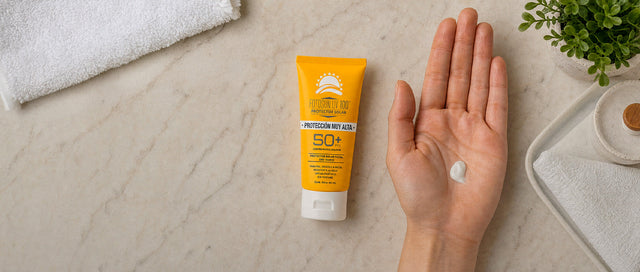
Knowing what skin types exist is essential to achieving a facial care routine that respects your dermis, prevents sun damage, reduces problems such as acne, blackheads, or excessive oiliness, and keeps your skin healthy. In this article, you will find guidelines to identify your skin type, understand its causes, and learn how to adjust your facial cleansing, hydration, and protection with specific recommendations from Fotosun UV 100.
What are skin types and why is it important to know yours?
Skin types are classifications based on how your skin responds to internal and external factors: lipid production, hydration level, pore size, sensitivity to irritants, and the degree of oiliness or dryness.
Knowing whether you have normal skin, dry skin, oily skin, combination skin, or sensitive skin allows you to choose appropriate products for your skincare routine, preventing incorrect products from worsening your complexion or causing irritation.
How to identify your skin type?
To learn how to identify skin types, start with a gentle facial cleanse: wash your face with a cleanser that does not alter the natural barrier, pat dry gently, and wait about an hour without applying any product. Observe the shiny or dry appearance of your face, how your skin feels to the touch, and whether there are areas that behave differently.
If your skin feels balanced, without noticeable shine or tightness, it is most likely that your skin is normal and balanced. When you observe that the T-zone (forehead, nose, and chin) presents oil while the cheeks are drier, you are dealing with combination skin, with oily and dry areas.
If your entire face has shine, visible pores, and a tendency toward blackheads or acne breakouts, it is most common for your skin to be oily. In the case of noticing dryness, roughness, and flaking, it is likely that your skin is dry. The presence of redness, itching, or easy reaction to products indicates sensitive skin, which requires specific, more delicate products.

Normal skin: identification and ideal care
What is it and how to recognize it?
Normal skin looks balanced, with a smooth texture, no excess shine or tightness, barely visible pores, and a homogeneous face. This type of complexion represents what many consider "healthy skin."
Daily routine: clean, hydrate, and protect
To maintain this balanced state, it is key to perform a gentle facial cleanse morning and night with a light gel or foam that does not affect the dermis's natural barrier. Then, apply a moisturizer with ingredients that maintain moisture without leaving a heavy sensation.
Daily sun protection is fundamental: we recommend Adaptive Color (60 ml) by Fotosun UV 100, a sunscreen with SPF 50+ and a soft touch of color that evens out the tone. Its non-comedogenic fluid texture makes it ideal for everyday use and can replace foundation when you are looking for a natural finish.
Dry skin: causes and degrees of dryness
How to identify if your skin is dry?
Dry skin is characterized by a lack of natural lipids and, therefore, by sensations of tightness or flaking. This condition can vary from mild to very pronounced: in the most noticeable cases, the skin shows roughness, fine lines, and loss of elasticity. Factors such as cold weather, the use of harsh soaps, age, or certain treatments can aggravate this condition.
Daily routine: gentle cleansing and intense hydration
Wash your face with creamy cleansers that respect the lipid barrier and avoid water that is too hot. Opt for moisturizers rich in emollients and humectants, such as glycerin or ceramides, which help retain water in the skin.
Applying products to slightly damp skin helps lock in hydration. If you wish to exfoliate, choose gentle treatments that remove dead cells without irritating.
For dry skin, Adaptive Color (60 ml) remains an excellent option due to its comfortable texture that also evens out the facial tone. If you prefer a solution for face and body, the Facial and Body Sunscreen (125 ml) with SPF 50+ is ideal when combined with your regular moisturizer.

Oily skin: causes, signs, and control
How to recognize it and what causes it?
Oily skin occurs when the sebaceous glands produce more sebum than necessary. This overproduction can be influenced by hormonal factors, genetics, or even the use of inappropriate products that clog pores. The result is a persistent shiny appearance on the face, marked pores, and a tendency toward blackheads and acne, especially in the so-called T-zone (forehead, nose, and chin).
Daily routine: cleansing, light hydration, and sebum control
To control oily skin, it is important to perform a facial cleanse twice a day with products that regulate sebum without drying out the skin. Ingredients like salicylic acid help keep pores clear.
Use oil-free moisturizers with a light texture that do not add extra oil. Avoid harsh exfoliants, as these can stimulate increased sebum production.
To control shine and protect your skin, the Solar Brush (4 g) with SPF 50+ in powder form is ideal for touch-ups during the day, even over makeup. For the first application, Fluid Protect Blue Light (50 ml) offers light, non-greasy, and fast-absorbing protection, perfect if you spend time in front of screens or prefer a fresh finish.
Combination skin: balance and treatment by zone
What is combination skin and how to identify it?
Combination skin is a skin type characterized by the presence of oily zones—especially the T-zone—alongside more balanced or dry zones on the cheeks. This pattern usually appears due to hormonal variations, improper use of products, or even climate changes.
Daily routine: products by zone and general balance
For combination skin, the ideal approach is to treat it by zone: use balancing cleansers that do not dry out the less oily parts of the complexion, and gentle exfoliants that help keep the sebum-prone areas under control. Hydrate with products that provide nourishment without being too dense; in many cases, a regulating serum helps more than thick creams.
Fotosun UV 100 Facial Sunscreen (60 ml) with SPF 50+ is excellent for combination skin: its light, non-comedogenic formula protects against UVA and UVB without a greasy feeling. For mattifying touch-ups during the day, the powder Solar Brush is a convenient option to always carry with you.

Sensitive skin: special care and safe products
What makes it sensitive and how to recognize it?
Sensitive skin usually reacts with redness, stinging, or tightness when exposed to strong fragrances, extreme temperatures, or products with irritating ingredients. Although sensitive skin can be dry, combination, or normal, it shares a weaker skin barrier that requires special attention.
Daily routine: gentle cleansing and protection without irritants
For sensitive skin, avoid products with strong fragrances, harsh alcohols, or irritating preservatives. Opt for gentle cleansers and moisturizers with ceramides and mild antioxidants that strengthen the skin barrier.
We recommend Fluid Protect Blue Light (50 ml) for its light, fragrance-free, and paraben-free formula. If you need a comprehensive option for face and body with a formula suitable for sensitive skin, the Facial and Body Sunscreen (125 ml) offers comfortable and effective protection.
Frequently asked questions
Can my skin change over time?
Yes. Skin can vary with age, hormonal changes, climate, or cosmetic treatments. For example, oily skin in youth may tend to dry out with maturity due to lower lipid production.
What habits help maintain balanced skin?
Maintaining a consistent routine of facial cleansing, proper hydration, daily sun protection, and avoiding overly harsh products or strong fragrances helps preserve soft, balanced skin that is less prone to problems such as acne or flaking.