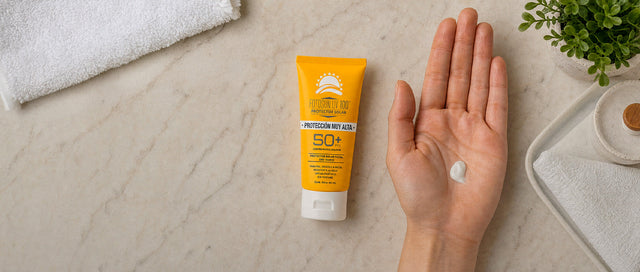
Knowing how to apply sunscreen correctly goes beyond just spreading on solar cream: it is an essential step in your daily skincare routine, as it protects the skin on your face and body from ultraviolet radiation. This habit reduces the risk of photoaging, prevents cellular damage, and acts as a barrier against solar radiation and blue light emitted by screens.
In this article, you will learn why you should use sunscreen, how to apply it according to different areas of the body, which products to choose, and how to maintain adequate protection throughout the day. By the end, you will know when to use sunscreen, why it is beneficial to use sunblock, and how to avoid the harmful effects caused by prolonged sun exposure.
Importance of facial and body protection
Incorporating sunscreen into your daily care not only prevents sunburn but also prevents the appearance of dark spots, premature aging, and UV-induced collagen breakdown. Whether you are outdoors or indoors in sunlight, daily sun protection is essential.
Unprotected exposure generates oxidative stress from free radicals, which accelerates skin deterioration. Furthermore, UV rays pass through clouds and windows, so dermatologists’ warning is clear: you should never skip sunblock on any day.
For skin prone to irritation, mineral sunscreens, such as Photosun UV's Blue Light Fluid Protect, offer an effective barrier without irritating the skin and without harsh ingredients like fragrances or parabens. This explains why it is important to use sunscreen on the face and body, even if there is no direct exposure.
Types of sunscreens
There are different types of sunscreens to suit every need:
-
Sun creams: dense, ideal for face and body with a moisturizing function.
-
Gels: light and fresh, suitable for sensitive or oily skin.
-
Sprays: convenient for reapplying to large areas.
-
Sun powders: such as Photosun UV's Solar Brush, useful for touch-ups during the day, especially over makeup, with a matte finish and no white residue.
There are also sunscreens with two types of solar filters:
-
Chemical: they absorb ultraviolet radiation to prevent it from penetrating the skin.
-
Mineral: they reflect it. They are preferred for sensitive skin and people with skin allergies.

Those looking for a tinted sunscreen can opt for Photosun UV's Adaptive Color, which adapts to your skin tone while protecting with SPF 50+.
Whatever your choice, verify that it indicates “broad spectrum,” meaning protection against both UVA and UVB rays, and an appropriate SPF. This label is key to effectively blocking the sun's rays responsible for sun damage and the progressive deterioration of skin tissue.
How to apply sunscreen to the face
Cleansing and preparation
Before applying any facial sunscreen, clean your skin and follow your usual routine with products like toner or moisturizer. Wait a few minutes before applying the sunblock to ensure proper adhesion. If you use actives like vitamin C or retinol, they should always be applied before the sunscreen, following a specialist's advice.
Amount and distribution
Use a teaspoon to cover your face and neck. Areas like ears, the hairline, and the upper chest are often forgotten but are also exposed to radiation. Insufficient application reduces sun protection and increases the risk of burns and damage.
In digital environments, Photosun UV's Blue Light Fluid Protect is ideal, as it protects against blue light from screens and is formulated for sensitive skin, with a light, fast-absorbing texture.
Wait before applying makeup
After applying sunblock, wait at least 2 minutes before applying makeup. This pause allows a uniform film to form that acts as a shield against UV rays. Otherwise, makeup could compromise its effectiveness.
Reapply during the day
Even water-resistant sunscreen loses effectiveness with sweat, friction, or the passage of time. Reapply every 2 hours, or after getting wet. The Photosun UV Solar Brush or tinted formulas like Adaptive Color allow you to do this without affecting your makeup finish, while maintaining a healthy and even tan.
How to apply sunscreen to the body
Areas and technique
Distribute sunblock over all exposed areas: back, legs, arms, nape of the neck, tops of the feet, and hands. Do not forget folds, elbows, or behind the knees. Apply generously and, if necessary, in sections.
During outdoor activities, be sure to use water-resistant sunscreens and reapply regularly. If the container is small, like the Photosun UV Travel Facial and Body Sunscreen, keep it with you at all times. For prolonged exposure, the 125 ml format of Photosun UV Facial and Body offers an excellent option for continuous use and full coverage without interruptions.
And for children, Photosun UV's Children's Facial and Body Sunscreen is formulated with SPF 50+, a pleasant scent, and hypoallergenic components designed for their sensitive skin.

Common mistakes when applying sunscreen
Using less product than necessary
Sunscreen should be applied in sufficient quantity. Using less than the recommended minimum reduces the filter's ability to block solar radiation, which leads to sunburn and a false sense of protection.
Forgetting certain areas
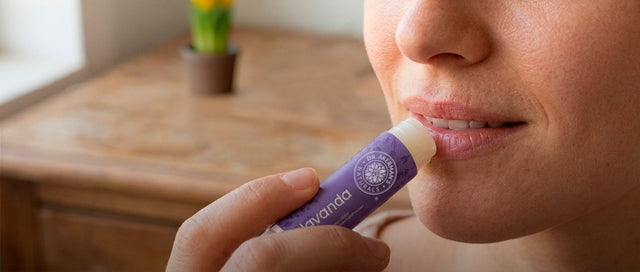
Lips, ears, neck, the back of the hands, or moles are continuously exposed to rays. Applying sun protection to these areas helps prevent cumulative sun damage and skin diseases.
Not reapplying
Ultraviolet radiation accumulates during the day. Reapplying sunblock allows you to maintain adequate protection against the cumulative effects of sun exposure.
Applying only on sunny days
Even if the sky is cloudy or you spend the day at home, sunlight and UV rays are still present. That is why it is good to use sunblock every day and not just during the summer or at the beach.
Extra tips
SPF and broad-spectrum protection
Choose sunscreens with SPF 30 or higher and broad-spectrum protection to neutralize both UVA (aging) and UVB (burns) rays. This combination visibly reduces the effects of the sun on the skin.
Fotosun UV 100 offers this advanced protection with a hypoallergenic, non-greasy, water- and sweat-resistant formula, ideal for daily use in any environment.
Sunglasses and hats
Physical sun protection also matters. Wear glasses with a UV filter, wide-brimmed hats, and clothing with special fabrics. These elements help reduce exposure and protect areas that sunscreen does not fully cover.
Sunscreen even if you don't leave the house
Being near windows, under LED lights, or in front of the computer implies exposure to radiation. Use sunblocks with blue light filters, like Photosun UV's Blue Light Fluid Protect, to prevent the appearance of dark spots and cellular deterioration.
Discover more Daclaf products, such as nasal spray; sunscreens; probiotic capsules such as advanced probiotics, probiotics for women, 10 billion probiotics, 2 billion probiotics; vitamin C sachets; amino acid supplement; fiber supplements and more.

Frequently asked questions
Can I use the same sunscreen for my face and body?
Yes, but it is ideal to use sunscreens formulated specifically for each area. Facial sunscreen usually has a lighter, non-comedogenic texture with ingredients adapted to the sensitivity of the face. In contrast, body sunscreens tend to be thicker and are designed to cover larger surfaces.
How long before sun exposure should I apply sunscreen?
It is recommended to apply sunscreen 15 to 30 minutes before exposure to solar rays. This margin allows the product to absorb properly and form an effective film against ultraviolet radiation. If you apply it right as you head out, you could be vulnerable during the first few minutes.
Does water remove sunscreen even if it is resistant?
Yes. Although many products are labeled as water-resistant, this does not mean they are waterproof. Prolonged contact with water, sweat, and friction reduces sun protection. Therefore, it is essential to reapply sunblock after swimming, towel-drying, or sweating heavily.
What is the difference between sunblock and sunscreen?
In general, the term "sunblock" has been used to refer to products with physical or mineral filters that reflect UV rays, while "sunscreen" is usually associated with chemical filters that absorb radiation. However, today both concepts are used interchangeably, provided the product guarantees broad-spectrum protection and an appropriate SPF.
What are the long-term consequences of not using sunscreen?
Regularly omitting sun protection promotes premature aging, the appearance of dark spots, loss of elasticity, recurrent sunburns, and, in extreme cases, serious skin diseases. Continuous exposure to ultraviolet rays without protection also accelerates the accumulation of sun damage and oxidative stress, affecting skin health at a deep level.